.avif)
Great service doesn't stop at answering the phones. It's a two-way street where communications must be responsive and modern to meet today's constituents where they are.
Today is a very big day for Polimorphic and the communities we serve. With the release of Outbound Communications, our platform facilitates both sides of the customer service journey: reactive customer service intake and proactive outbound communications.
Clients would often mention that they wanted to reach their residents in the same intelligent ways that Polimorphic handles inbound service intake. Over the course of many months, we've worked directly with clients to shape and test these capabilities in real world situations.
The public launch completes the front-desk experience for residents.
Ready to see it in action already? Take a closer look with Polimorphic's CTO, Kyle Patel, to explore more of its capabilities hiding under the hood and how to use them.
Most outbound communication work falls into one of four goals. Managing team capacity and taming surges of inbound demand are complementary to the core platform, while others open new opportunities to pick up where other communication tools fall short.
Reach residents before they call. Unplanned service disruptions, like a water main breaking, or upcoming rate changes, billing cycle shifts, planned road closures, and holiday schedule changes, where a proactive message can largely absorb before the phones start ringing.
Meet compliance and engagement requirements. Public notice on liquor licenses, development review, zoning variances, infrastructure project milestones. Reach the right residents at the right moment, with a record that the notice went out.
Drive action. License and permit renewals. Public health advisories. Program enrollment. Voter precinct reminders. (Information residents need to do something they already need to do.)
Build community. Parks and rec registration, farmers markets, public meetings, seasonal programming. Direct outreach to the residents most likely to show up.
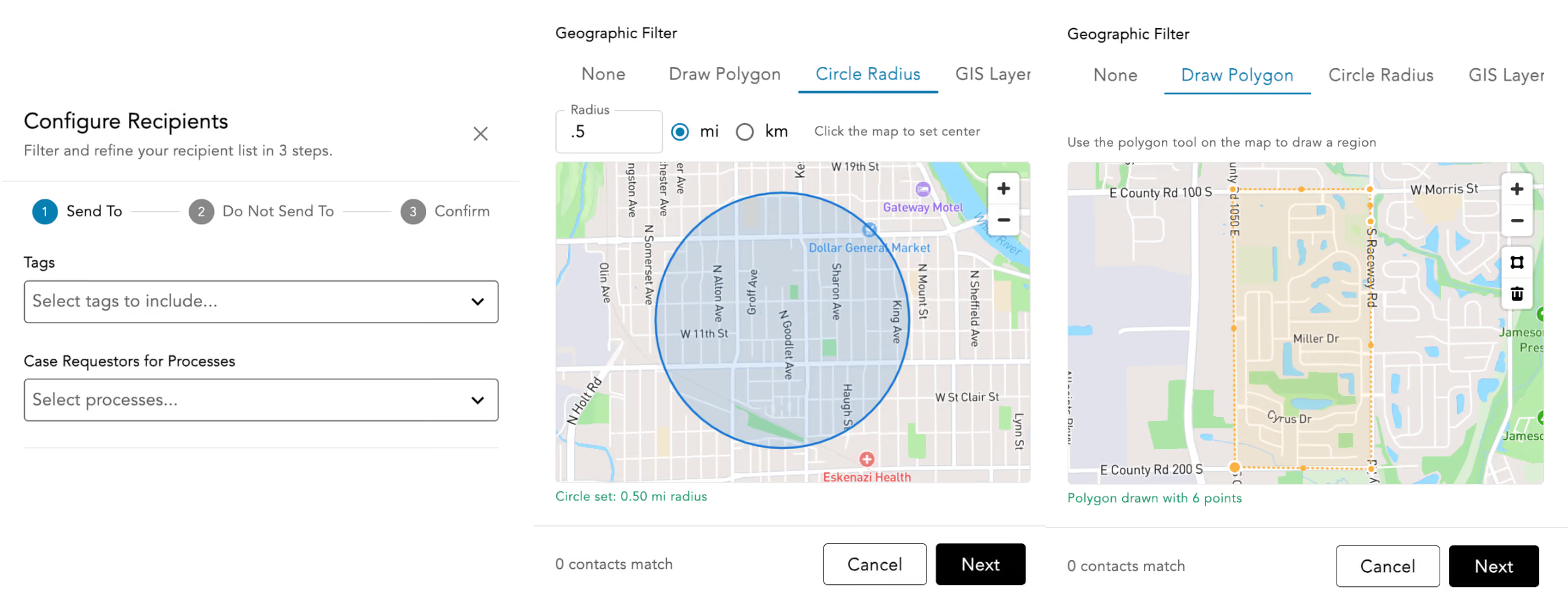
Utilities & Public Works: A water main breaks, affecting half of a neighborhood, a snow plow gets a flat, trash services are delayed for a day. Draw a polygon around the affected areas to notify specific households by text or email in minutes.
Planning & Community Engagement: Send radius-based notices for development projects, liquor licenses, hearings, and open houses, while maintaining an auditable record of outreach.
Solid Waste & Operations: Alert residents about holiday pickup schedules, storm debris collection, or service interruptions before phones start ringing.
Administration and Communications: For community-wide events, such as festivals or parades, notify neighbors of road closures and parking restrictions.
Outbound Communications is now a core part of the platform. Its unique strengths as a communication tool often stem from the platform you already know well. It runs on the same GIS data, the same contact records, the same support agents, and the same case management infrastructure as your inbound service intake and resident CRM.
The message you send, and the reply a resident sends back, live in the same profile.
Geographic targeting resolves against your own data, not a CSV upload.
Two-way replies by phone or SMS route through the same AI that runs your front desk, turning any notification into a dynamic conversation. (Replies with powerful agents can unlock levels of personalization a typical contact list cannot.)
For your team, that means one place for every resident interaction, one record, one workflow. For residents, it means the city responds the same way no matter which direction the conversation started.
Outbound Communications is available today across SMS and email, with WhatsApp available on request and voice coming in the near future. This is the beginning of a long-term commitment to outbound communication as a core part of the platform.
Take a full tour of Outbound Communications with Polimorphic's CTO, Kyle Patel, and explore more of its capabilities hiding under the hood and how to use them.
If you're a Polimorphic customer, reach out to your CSM to talk through what makes sense for your team. If you're new to Polimorphic, book a walkthrough and we'll show you how both sides of the front desk work together.