


Government spending is not known for being frugal.
We often hear stories all the time about misuse of funds, fraud, and overspending. It's worth noting while these stories are a small fraction of what actually happens (most agencies are diligent with how they spend), this is an element of truth here. If you've worked in or with the government, you know it has a lot to do with procurement. Here’s why.
RFPs are usually scored section by section: capabilities, past performance, and so on. One section is always cost. Sometimes it's 30% of the total score. Sometimes it's simpler than that: Lowest cost among qualifying bids just wins.
Other versions give a massive scoring advantage to the lowest bidder, where the next best bid gets less than half the points. The incentive makes sense on paper. We're working with taxpayer dollars, not our own money, so we should be responsible stewards. Except the results don't back that up. Lowest cost hasn't meant lower costs. So why?
There are a few reasons for this: a lack of accounting for total cost of ownership, lowest cost not meaning highest value, and bidding to win, not to deliver. Let's go through each.
Think about boots. Cheap boots cost $30 but only last six months. Quality boots cost $100 but last five years. If you're replacing the cheap pair every six months, you actually spend more over five years buying the cheap boots than you would have spent buying the good ones once.
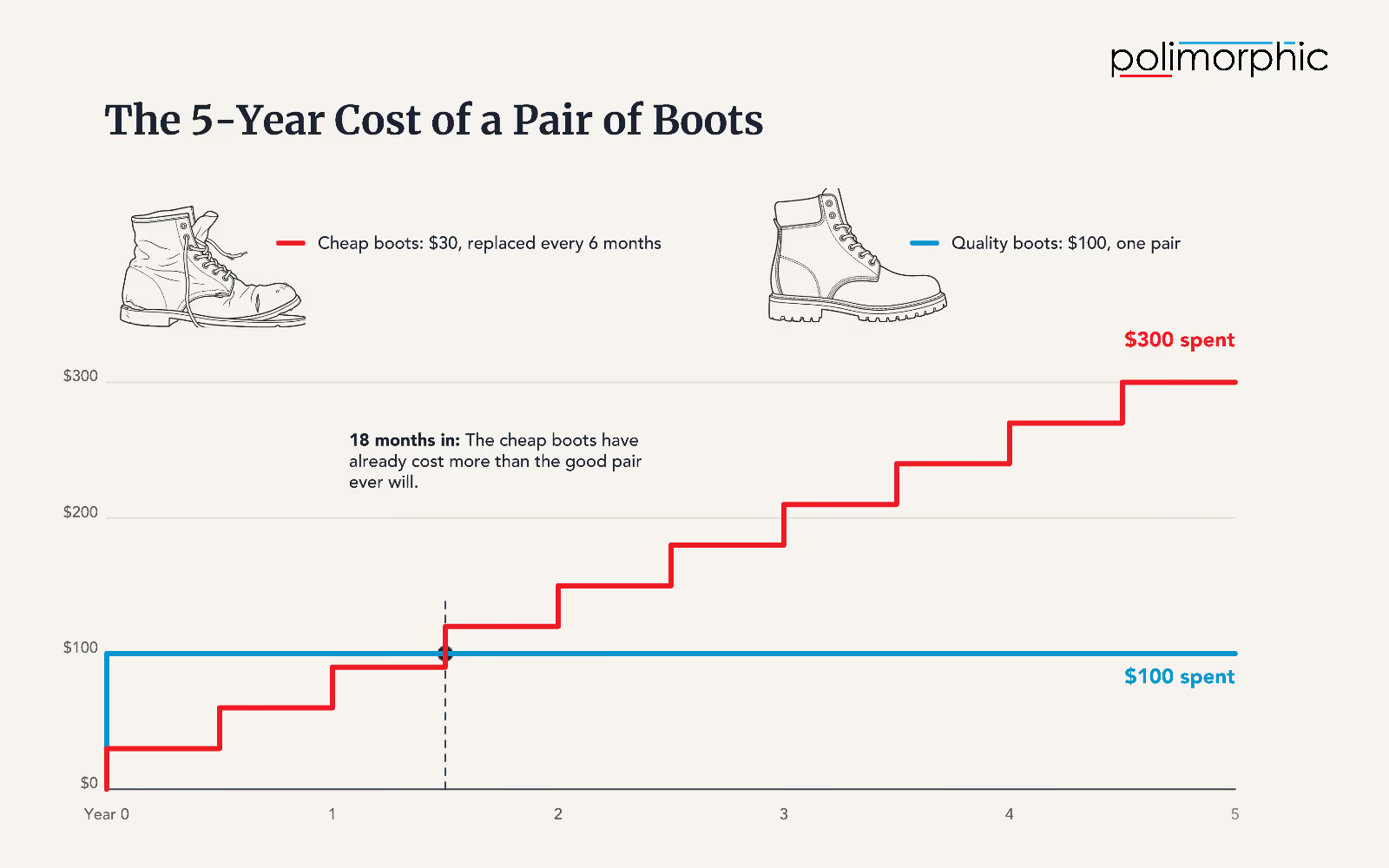
We all know this from our own buying habits. The budget option is a budget option for a reason. Sometimes it's the right call. Often it isn't. And when public bids advertise the lowest cost as the winner, it creates the wrong incentive. Vendors start playing games to hit that number. More on that in a bit.
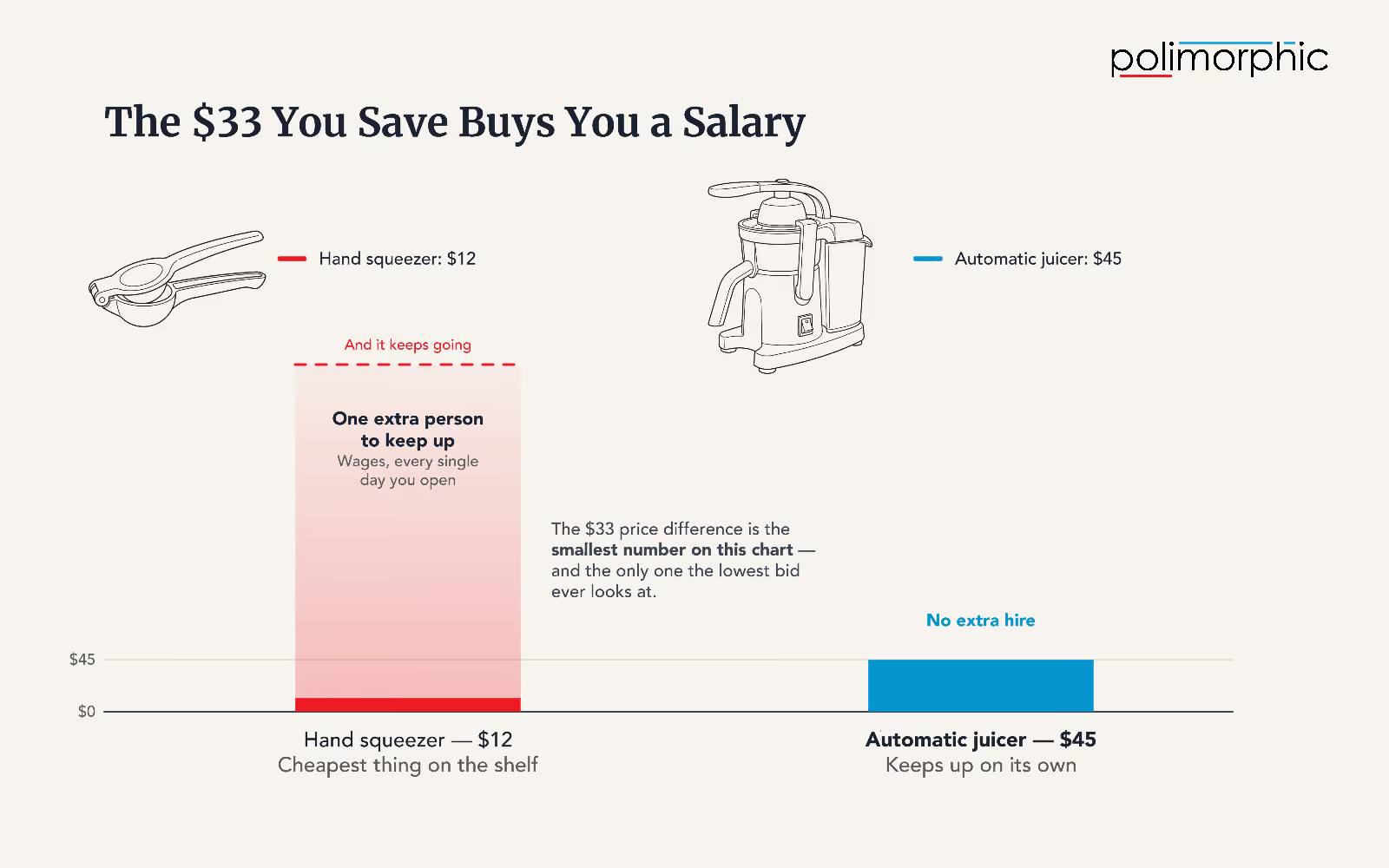
Say I run a lemonade stand. I can buy a hand squeezer for $12 or an automatic juicer for $45. Lowest cost says buy the $12 squeezer. But cost goes beyond the price tag on the item. If I'm squeezing hundreds of lemons a day and each one takes longer by hand, I probably need to hire another person to keep up. That extra person costs a lot more than the $33 difference.
This is often how government buys, though. Procurement almost always awards the $12 option as long as it checks the boxes, and the agency eats the cost later in staff time spent on low-value work because they're stuck using the lowest-cost tools. Over the long run, that shows up as higher tax rates and lower employee retention, which also costs the taxpayer more.
We run into this constantly with our own products. We use high-quality services to make our voice agents sound natural and give our chat agents strong reasoning. That's a better and more worthwhile product. But then an alternative can cut corners with questionably secure LLMs, robotic-sounding voices, and so on. Lowest cost on paper, but not the better value.
Now put yourself in a vendor's shoes. Winning these contracts is how you survive and pay your employees. You know that once your foot is in the door, governments rarely leave. So you bid low, check every box, quote an absurdly low price, and win.
Then implementation starts. One path. Every small thing that wasn't explicitly in the original scope gets a "no" unless the agency pays for an expensive change order. Another path: You just renegotiate the price after the fact, knowing full well they're unlikely to rebid the whole thing.
Neither path is honest. The winning number was never the real number. But before we blame the vendors, notice what the process did: it made lowballing the bid a rational move and told everyone who bid honestly to go home. When the rules reward the wrong behavior, you get the wrong outcome constantly.
There's a principle in all of this. In the end, you almost always end up paying close to market value. The only question is whether you pay it honestly upfront or get squeezed for it later.
So if the lowest cost usually wins, how do some of these giant consulting contracts get awarded for $90 million and still deliver low-quality work?
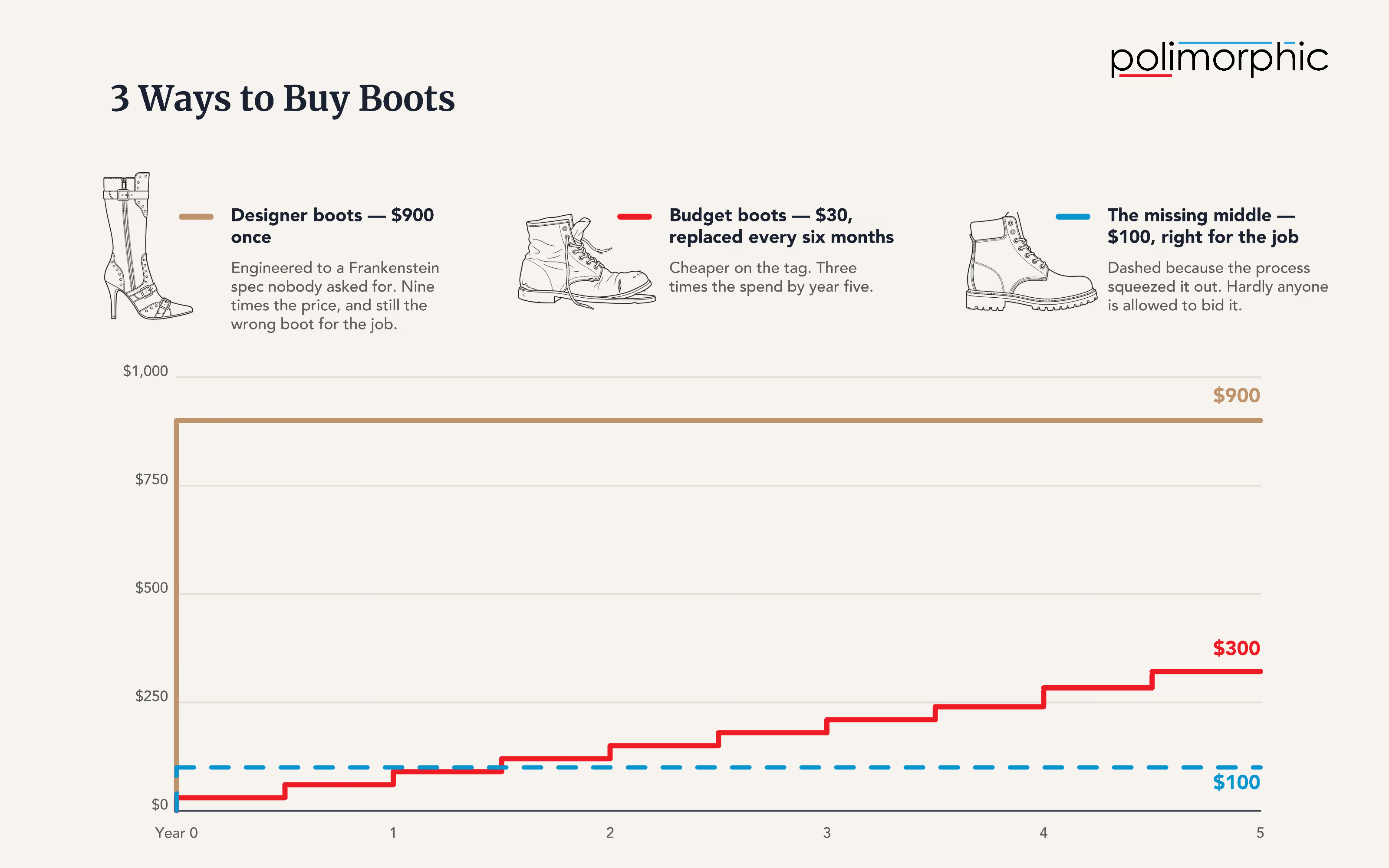
This goes back to the change order problem in section 3. In an effort to fix this problem, governments created a new one (In my family, we call this trying to solve a stomachache with Tylenol). Instead of fixing the incentive, they started writing out every conceivable requirement up front, creating massive RFPs meant to cover everything.
The problem is only a handful of companies can realistically bid on something that big. For example, certain case management system bids have required deep past performance and unintentionally narrowed the field to two vendors. So the fair process leaves you with two options: Budget tools that cost more than their price tag suggests, or consultant megaprojects priced like the monopolies they are. The thing that's missing is the middle: good quality, fairly priced. The process itself squeezed it out.
A few things follow from all this.
Agencies moving toward cooperatives have the right idea. You can still compare quotes, but it's built for best value instead of lowest cost. Never issue a lowest-cost RFP. I can't think of a single case where it's worth it. And start from value: work with partners, not vendors. Set goals and determine ROI. Partners get creative on contracts and pricing to align incentives. Vendors look for the next change order.








.avif)
