


November 16, 2026

-

4 minutes

Share This Content:

Customer Education

Government Doesn't Run on a Meter: Why Consumption Pricing Fails the Public Sector

"One of the most difficult things to estimate"

A government AI strategist asked a simple question on LinkedIn last week. Had anyone moved from OpenAI's business plan to Enterprise? The license minimum had dropped, he noted, but Enterprise meant switching from per-seat pricing to consumption. And consumption, in his words, is one of the hardest things to calculate.

He's right. In fact, it's a complete mismatch for government budgeting.

Consumption pricing works fine for a startup with a credit card and a flexible burn rate. It does not work for a county that sets its budget a year in advance, in public, with a vote. When you can't estimate a cost, you can't budget it. When you can't budget it, you can't responsibly buy it.

Government Budgets are a Promise

Here's how most governments fund technology. Departments submit requests months ahead. Finance builds a budget. Council or the board adopts it in a public meeting. That number becomes a line item, and the line item is the ceiling.

There is no "we'll true it up next quarter." Going over means a budget amendment, a supplemental appropriation, or pulling money from somewhere else. Every one of those is a public conversation, often on an agenda, sometimes in the local paper.

Consumption pricing asks government to do something it is built not to do: commit to an unknown number. A vendor quote that says "estimated $X, actual cost may vary based on usage" is a quote a finance director can't sign with a straight face. Procurement wants a not-to-exceed amount. Auditors want to see that what was approved is what was spent. Elected officials want to know the cost before they vote, not after.

Surges aren't the exception. They're the job.

Government demand doesn't run on a smooth curve. It spikes, and it spikes for reasons nobody controls.

  • Storms and emergencies. A hurricane, ice storm, wildfire, or flood can multiply call volume overnight. Residents want shelter locations, road closures, debris pickup schedules, and outage updates, right now.
  • Tax and billing season. Property tax bills, assessment notices, and utility rate changes send residents straight to the phone.
  • Elections. Registration deadlines, polling places, and mail ballot questions pile up in the weeks before every election.
  • Seasonal programs. Spring permitting rush, summer rec registration, school enrollment, snow emergency parking rules.
  • The unexpected. A water main break, a boil-water notice, a policy change that goes viral.

Under consumption pricing, every one of those moments costs more. The bill goes up exactly when the community is under the most stress and staff are stretched thinnest. A bad storm becomes a weather event and a budget event.

That's backwards. Surge moments are when AI earns its keep. They're when a front desk team of four can't answer 400 calls, and residents need accurate answers anyway. Pricing that penalizes those moments penalizes the reason you bought the tool.

The costs that don't show up on the invoice

The unpredictable bill is only the first problem. Consumption pricing creates quieter ones too.

Teams start rationing. When every query has a price tag, someone eventually asks staff to use the tool less. Departments get told to hold back. Residents get pushed back to the phone queue. The technology you bought to expand service ends up capped to protect the budget.

Success gets punished. Launch well, and residents use it more. Use it more, and costs climb. Now the department that did everything right is the one explaining an overage at the next budget hearing.

Finance inherits a forecasting job. Someone has to track usage monthly, model the rest of the year, and flag risk before the line item runs dry. That's staff time most finance teams don't have.

Procurement gets harder. Many solicitations and contracts expect a fixed price or a firm not-to-exceed. An open-ended usage model can slow approvals, trigger extra legal review, or stall a purchase entirely.

What Government-Ready AI Pricing Looks Like

Government doesn't need cheaper meters. It needs no meter at all.

Pricing built for the public sector should do three things:

  1. Match the budget cycle. A fixed annual price that goes into the budget once, gets approved once, and holds for the year.
  2. Absorb the surge. Storm week, tax week, and election week cost the same as a quiet week in August. The vendor carries the volume risk, not the agency.
  3. Scale with the community, not the clicks. Tie price to something stable and knowable, like population served or departments covered, so leaders can plan multi-year growth without guessing.

That's the model Polimorphic is built on. Agencies know what they'll pay before they sign. Then they're free to do the thing they bought AI for: answer every resident, every time, especially when it matters most. Our customers see 50–90% fewer calls reaching staff. That relief shouldn't come with a surprise bill attached.

5 Questions to Ask Any AI Vendor Before You Sign

  1. What will we pay this year, in one number?
  2. What happens to our bill during a declared emergency or our busiest month?
  3. Is there a firm not-to-exceed amount we can put in the contract?
  4. Who tracks usage, and who carries the risk if it runs high?
  5. Will this price still make sense if residents use the tool twice as much next year?

If the answers start with "it depends," you're looking at a meter.

Your residents don't call less because the budget is tight. Your AI shouldn't cost more because they called.

Book a demo and see what predictable pricing looks like for your agency.

Why Information Requests Keep Climbing

Whatever your state calls its law, whether that's FOIA, FOIL, CORA, the Open Records Act, or the Right-to-Know Law, the underlying promise is the same—the public has a right to see the records of the people who serve them. Meeting that promise is getting harder, because there are more records, more formats, and more requests than ever.

Operations & Workflows

3 minutes
Read Article

What We Heard Across Georgia This Year

We spent the year listening at conferences across Georgia. Here’s what city and county leaders told us about budgets, burnout and leaving things better than they found them.

Strategy & Policy

4 minutes
Read Article

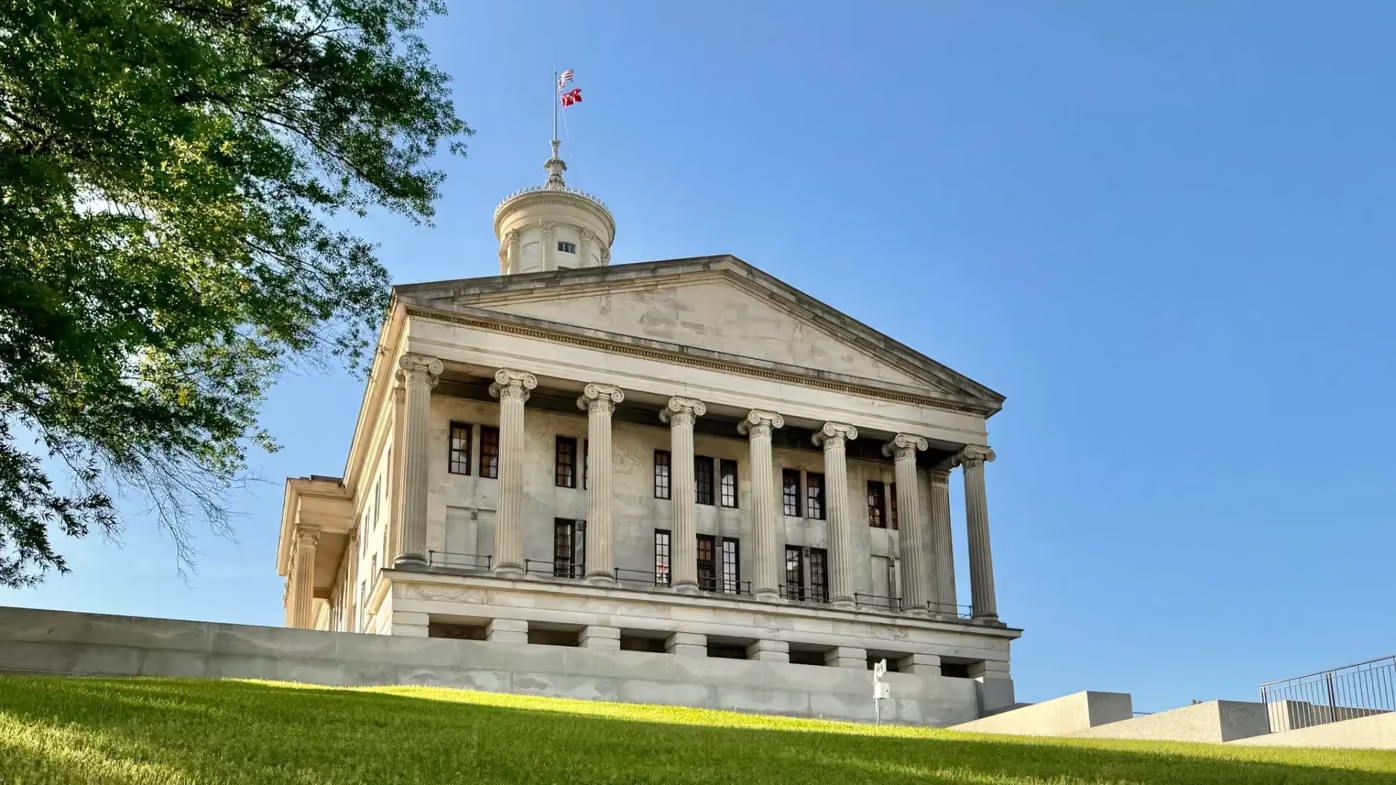
What Public Chapter 1044 Means for Tennessee Development Review

It’s more than likely every government planning office has a dreaded, cliché pile made up of past-due site plans, development applications, inspection requests, and so on—each metaphorically tugging on your sleeve like a toddler who doesn’t see you’re on the phone. Tennessee is looking to fix that because on January 1, 2027, that nagging pile is getting a review deadline.

Strategy & Policy

Read Article

Navigating the AI Conversation with the Public and Elected

Most public blowups about government technology aren't really about the technology. They're about the absence of guardrails. If your community's first exposure to your AI program is a headline, you've already lost the framing.

Strategy & Policy

5 minutes
Read Article

Why Lowest Cost RFPs Often Mean More Expensive for Government

We all know this from our own buying habits. The budget option is a budget option for a reason. Sometimes it's the right call. Often it isn't. And when public bids advertise the lowest cost as the winner, it creates the wrong incentive.

Strategy & Policy

4 minutes
Read Article

New: Introducing Outbound Communications by Polimorphic

Polimorphic News

6 minutes
Read Article
cta

How Can We Optimize Your Local Government?

Request Demo